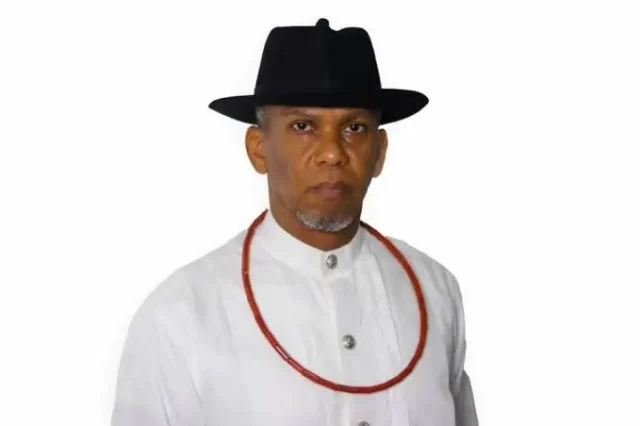

By Sunny Awhefeada

The title of the last column before this was “As I take my turn”! It was written in a moment of expectation arising from the realization that I would be delivering the 117th inaugural lecture of the Delta State University, Abraka. Although, nearly burnt out by the rigour of having to think and write the lecture, I did not anticipate that the event was going to drain me physically and psychologically. Despite the strain that came with the preparations, all I could see was myself adorning the academic gown and pontificating as if nothing else mattered. Then the moment came. The procession with the university bedel at the head, the background sound from the dexterous Department of Music choir, the bowels of the auditorium holding the mammoth audience! The procession marched in with academic aplomb and dignity. As always, it was a spectacle to behold! Then the time tested academic rites began climaxing with introductions and doffing of hats! The sublime citation by Professor Enajite Ojaruega, the university orator, set the tone for the lecture. And yours sincerely mounted the podium and spoke on “The Literature of our State: An Evolutionary Engagement with Modern Nigerian Literature” for nearly an hour! The climax of the lecture was greeted with approbation, the kind we called “a round of applause” in our secondary school days. The lecture has generated and it is still generating a lot of buzz. I had in my previous article gave a hint of the lecture’s introductory section. Here, I intend to reproduce the lecture’s concluding thoughts.

However, before inserting the concluding thoughts I must reproduce part of the acknowledgements which was also published in the last article, aforementioned: “As I take my turn, I look back and say thank you to God and humanity. I have been a beneficiary of the goodness of humanity. I am a witness to the Urhobo ethno-philosophy “I wrap people around myself like clothes”. I think I have benefitted from every human being I have encountered. I must admit that what I have become is the making of the generousity of humanity”. In truth, God and humanity manifested goodness when I took my turn and I cannot take that for granted! Below then are the lecture’s concluding thoughts:
Vice-Chancellor, Sir, my conclusion will revolve around why Nigerian literature matters! Modern Nigerian literature commendably reflect the Nigerian spirit. It is also probably the nation’s prime endowment in human capital and international prestige. Ezenwa-Ohaeto (1991) recognizes the preeminent position of Nigerian literature in Africa and beyond. He says, “Few countries have witnessed so many writers within so short a time and fewer still have produced so many distinguished writers” (155). The literature of our state matters because it embodies the totality of our lives as we lived and live it. The literature holds a mirror to us that is didactic, educative, entertaining and above all therapeutic. What is called Nollywood which is one the biggest three film industries in the world with an overwhelming global acceptability is actually literature within the purviews of film studies, popular culture and cultural studies. Literature in its creative essence is endowed with the capacity to not only encode national aspirations, but also able to offer alternative pathways out of underdevelopment. Literature has the capacity to inspire a nation. This is the reason why many American presidents beginning with J. F. Kennedy insist on having poetry read by a distinguished poet during presidential inauguration. Were literature not relevant there would have been no Nobel Prize for Literature. Wole Soyinka’s winning of the Nobel Prize in 1986, the first black writer to do so, gave fillip to Nigerian literature as having come of age. Before then had been Nigerian writers who have won the Commonwealth Prize with works that command global respect. Ben Okri’s winning of the Booker Prize in 1991 further enhanced and confirmed the sublimity of Nigerian literature. It is apt to say that Nigerian literature through the towering achievements of the writers remains a redemptive element for Nigeria across the globe. Nigerian letters have brought more honours and prestige to the nation more than any other sphere of human endeavor. It is a literature that is far ahead of the domain from which it sprang. Thankfully, the West African Examination Council (WAEC) made literature a compulsory component of English Language to underscore the centrality of literature to human capital development through creative and critical thinking. Should every academic programme in our tertiary institutions not make literature compulsory to holistically cultivate the mind of our youths? I think so! It is not by accident that the best known Nigerian names in the world beginning from the 1960s till date are writers. Chinua Achebe, Wole Soyinka, Christopher Okigbo, J. P. Clark, Isidore Okpewho, Niyi Osundare, Tanure Ojaide, Femi Osofisan, Ezenwa Ohaeto, Tess Onwueme, Chimamanda Ngozi Adichie, Helon Habila have become global brands. The same thing can be said about some of the leading critics of Nigerian literature like M. J. C. Echeruo, Abiola Irele, Dan Izevbaye, Biodun Jeyifo among others.
Nigerian literature has demonstrated an uncommon commitment and fidelity to the Nigerian dream. From its seminal moment when it countered colonial assumptions to drum up awareness and raise support for the validity of an indigenous way of life and thus advance the cause of nationalism the literature has all the way engaged Nigeria in a constructive dialogue of commitment. As an altruistic enterprise Nigerian literature was true to itself and nation when at independence and after the leaders of the new nation started derailing the ideals that fired the independence struggle. The young writers then focused on the foibles by way of critical realism and also pointing at the direction the nation should go. That early mandate of remonstrating against socio-political and economic malaise and offering alternative pathways out of the national quagmire remains an abiding assignment for Nigerian literature. The Nigerian writer enacted the role of a watchdog and tribune and sometimes writing equated dissidence, especially during the period of military dictatorship when it was a crime to think differently, and the writers suffered persecution. Josaphat Kubayanda (1990) sums this up thus: “Postcolonial dictatorship in Africa concerns itself with repression which, in effect, means the arrest, exile, execution, or consistent harassment of dissident voices” (5). Okigbo died in the war, Saro-Wiwa was executed, Soyinka suffered imprisonment and exile, Ifowodo was detained, while Iyayi was hounded unto death. The Nigerian writer is a teacher as Achebe did say. He or she is the voice of vision of his time as Soyinka taught us. He or she is a fighter as did Okigbo, and as Osundare poetically puts it the (Nigerian) writer is a righter. These are not just self-assumed labels, but they underline the thematic focus of the literature. What could be drawn by way of inference and conclusion is that the literature of our state is about our state and it has evolved in a sustainable manner. It is historicized imagination. The literature has been visionary and it is doing well in its constructive engagement with the state. The literature of our state is a functional literature.
Nevertheless, there is a disturbing and observable irony in Nigerian literature. This irony manifests in the reality that a body of writers whose avowed nationalism is not in doubt now mostly live overseas far beyond the shores of the nation they love and write about in sublime cadence. This has bred the reality that Nigerian literature now thrives better abroad in America and Europe especially, a point Biodun Jeyifo (2006) lamented. The same thing can be said about the criticism of Nigerian literature, its reception and teaching. Many of the leading critics of the literature are dispersed across universities in Europe and America. This vogue which started in the 1990s has not exacerbated with many younger scholars looking forward to relocating to America and Europe. A disturbing feature of this trend is that Nigerian writers in diaspora now feel compelled to write in a cosmopolitan manner to suit their Western audience. This is denuding the literature of its Nigerian identity and character. The criticism is also beginning to ring empty as it is increasingly becoming mere theoretical exercise and not evaluating literature as engagement that earlier critics configured it to be. The danger in this trend is that the bulk of what should constitute Nigerian literature is likely going to be assimilated in the cultural production of other climes. This is even more so when the exchange rate between the Naira and other world super currencies does not enable the Nigerian readers especially teachers and students of Nigerian literature to have access to such writings, books and journals that constitute their exegetical channels.