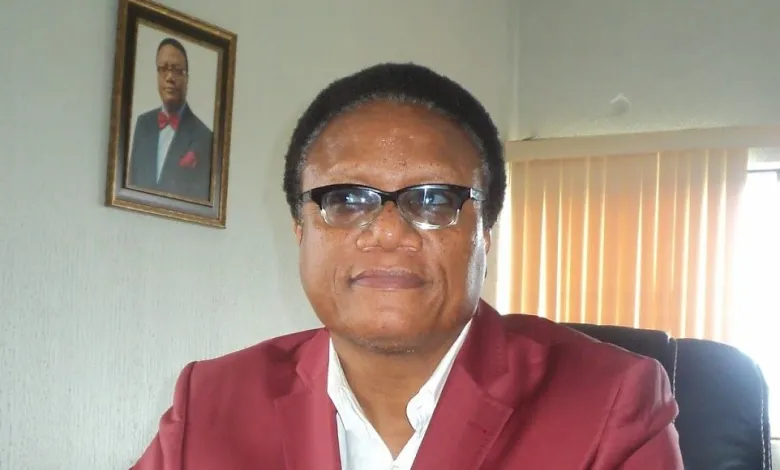

By Dr. Ime Johnson
The Federal Road Safety Corps (Amendment) Bill, 2026, was recently passed by the Nigerian Senate. This has generated a lot of debate, especially among the religious class, on the provision that seeks to prohibit preaching in commercial vehicles alongside hawking and trading. Although this bill is yet to receive presidential assent, little wonder if the road agency did a thorough consultation with relevant stakeholders. More worrisome is the smooth passage of the bill on the floor of the Senate.
It is, however, imperative to note that the supposed bill goes beyond road safety as it touches on the fundamentals of not only religious freedom but on the core essence of democracy which guarantees equality before the law as well as responsible governance.
Public preaching is one way religion meets the law. The 1999 Constitution of Nigeria, Sections 38(1) and 42, emphasised freedom of religion and its attendant manifestations in worship, teachings and practice without discrimination. To gag any person of these is tantamount to a breach of one’s fundamental human right. As a religious scholar, Evangelism and Da’wah are integral means of propagating the gospel. It is the cardinal objective of the Christian and Islamic faith, which is not limited to the church or mosque. To restrict one is an affront to the fundamental right of adherents of the said religion.
The Universal Declaration of Human Rights (UDHR) also, in very clear and strong terms, asserts religious freedom. Going forward, the Federal Road Safety Corps must look inward and outward to ascertain the quality of road safety laws it postulates for the common good of the citizenry and adjust to best global practice without discrimination. For example, upon embarking on a pilgrimage journey either to the Holy Land of Israel or Mecca, tour guides usually preach in the vehicles that convey tourists. This is done to prepare them for the particular site bound for every visit.
Whether it is humans who preach in vehicles or music/preaching is aired via radio on transit is one and the same. Is the law also against these? What can we say about speakers that are mounted on vehicles with loud music during political campaigns? What is sauce for the goose should also be for the gander.
Responsible government would rather fix bad roads that have caused severe loss of lives and property of the citizens than dabble in non-essentials in the name of road safety prohibition laws against preaching on public vehicles. The numerous checkpoints mounted by law enforcement agencies, including the Federal Road Safety Corps, have caused several accidents on our highways. The nuisance of collecting money from motorists on the highway is not left out of the menace. Like the Holy Book said, “Woe unto you scribes and Pharisees, hypocrites! for ye pay tithe of mint and anise and cummin, and have omitted the weightier matters of the law, judgement, mercy, and faith: these ought ye to have done and not to leave the other undone” (Matthew 23:23).
I urge the National Assembly and the President to reconsider this legislation by consulting widely with religious bodies, civil society, transport unions, road safety experts and constitutional lawyers. The bill needs to be tinkered with to preserve our democratic and religious liberty, thus engendering the unity and progress of the Nigerian project.
Rev Dr Ime Johnson is the National Vice President of Christ Gospel Church of Nigeria and Financial Secretary of the Pentecostal Fellowship of Nigeria, South -South Zone. Phone/Whatsapp: +2348102980515, Email: imehsonekpo@gmail.com